A Water Filter Pitcher Pays for Itself in 6 Weeks
The average American household spends $216/year on bottled water. A $25 Brita pitcher with $2/month in filter replacements cuts that to nearly zero. The math is embarrassingly fast.
Payoff Time
1.6 mo
Water Filter Pitcher vs Bottled Water
Product cost
$25
one-time
Annual savings
$192
vs Bottled Water
The Setup: Bottled Water Is a Quiet Monthly Expense
Nobody tracks their bottled water spending because each purchase is small — a $5 case here, a $3 single bottle at the gym there. But the Bureau of Labor Statistics Consumer Expenditure Survey puts average American household spending on bottled water at roughly $216/year. For families who rely on it as their primary drinking water, the number is closer to $400-600.
The filter pitcher changes the economics entirely: instead of buying something pre-packaged and disposable, you run tap water through a charcoal filter that costs pennies per gallon. Brita's standard filter handles 40 gallons and lasts about 2 months. At U.S. average water rates (~$0.004/gallon), that 40-gallon filter costs about $0.16 in water plus $3.75 for the filter — roughly $0.10 per gallon of filtered water. Bottled water runs $0.30-$2.00 per gallon depending on brand and source.
Our base case: a 2-person household spending $18/month on bottled water. A standard Brita pitcher costs $25 upfront, plus about $2/month in filters ($24/year for a 6-pack). Net monthly savings: $16. Breakeven: $25 ÷ $16 = 1.6 months.
| Filter Pitcher | Bottled Water | |
|---|---|---|
| Upfront cost | $25 | $0 |
| Monthly ongoing | $2 | $18 |
| Month 1 total | $27 | $18 |
| ★ Breakeven (~6 weeks) | ~$28 | ~$28 |
| Month 3 total | $31 | $54 |
| Month 6 total | $37 | $108 |
| Year 1 total | $49 | $216 |
| Year 3 total | $97 | $648 |
| 5-year total | $145 | $1,080 |
* All figures are estimates. See methodology for assumptions.
Cumulative Cost Over Time
The lines cross at the breakeven point — that's when the savings zone begins.
The 5-Year Picture: $935 Saved
Over five years, you'll have spent about $145 total (the $25 pitcher plus $120 in filter replacements) versus $1,080 in bottled water. That's a $935 difference for an appliance that requires no electricity, no subscription, and about 30 seconds to refill.
For the family of 4 scenario (spending $40/month on cases of water), the 5-year gap is $2,400 in bottled water vs. $145 for filtered. You'd save over $2,200 with nothing but a $25 pitcher.
What About the Taste Difference?
Most people can't distinguish filtered tap water from mid-range bottled water in blind tests — and filtered water reliably beats unfiltered tap in taste tests. The filter removes chlorine and chloramine (what makes tap water taste "off") without stripping beneficial minerals the way distillation does.
If you've been avoiding tap water because of taste, a $25 pitcher solves 90% of the taste gap. ZeroWater's 5-stage filter handles the remaining 10% for harder water situations — at the cost of higher filter replacement fees.
Sensitivity Analysis: Your Results May Vary
Payoff time changes based on how much you currently spend.
Family of 4, heavy bottled water users
Cases of water every week. $40+/month is common for larger families.
21d
$456/yr
Average household (our base case) (our base case)
$18/month in bottled water — the U.S. average based on consumer spending data.
1.6mo
$192/yr
Occasional bottled water buyer
You mainly drink tap but buy a case now and then. ~$10/month on bottled water.
3.1mo
$96/yr
"A $25 Brita pitcher saves $192/year on bottled water. Payoff: 6 weeks. After that, it's like being paid $16/month to use your own tap."
What We Recommend
All three options filter effectively. The differences are: contaminant reduction claims, filter lifespan, and ongoing cost. Brita wins on simplicity and lowest total cost of ownership. PUR wins on certified contaminant reduction (lead, etc.). ZeroWater wins on dissolved solids removal — at the cost of higher filter fees.
Brita Standard 10-Cup Water Filter Pitcher

$25
upfront
1.6mo
payoff
$192
/ year
The classic entry point. Filters 10 cups, fits most fridge doors. Standard filters cost about $2/month. This is the one to buy if the math is your only concern — it's the same filtered water for a fraction of the upgrade cost.
Check current price →Price shown is approximate. Click for current price. Affiliate link.
PUR PLUS 11-Cup Water Pitcher with Lead Reduction Filter

$35
upfront
2.2mo
payoff
$192
/ year
PUR filters are NSF-certified to reduce 70+ contaminants including lead — more than Brita standard. Good choice if your municipal water report shows any concerns. Filters run slightly more than Brita, closer to $2.50/month.
Check current price →Price shown is approximate. Click for current price. Affiliate link.
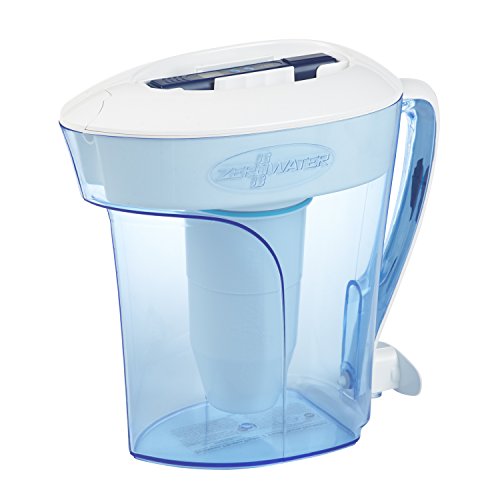
ZeroWater 10-Cup Pitcher with 5-Stage Filter + TDS Meter
$40
upfront
2.5mo
payoff
$144
/ year
ZeroWater removes virtually all dissolved solids (TDS ≈ 0), with a free TDS meter included. The catch: filters cost more — roughly $5-6/month — which eats into your savings. Annual savings drop to ~$144 vs. Brita's $192. Buy ZeroWater for near-distilled water quality, not for maximum ROI.
Check current price →Price shown is approximate. Click for current price. Affiliate link.
What we didn't account for
- → Filter costs vary by model. This analysis uses Brita Standard filters (~$2/mo). PUR filters run ~$2.50/mo. ZeroWater filters are significantly pricier at ~$5-6/mo, which reduces annual savings to ~$144. Annual savings figures in each product card reflect the correct filter cost for that product.
- → We assumed you stop buying bottled water entirely. If you keep buying the occasional case or single bottle, your savings shrink. The math above assumes a full switch from bottled to filtered tap.
- → Municipal water quality varies. In most U.S. cities, tap water is safe to drink and a standard carbon filter handles taste. If your local water report shows lead or other concerns, consider PUR (certified for lead reduction) or a reverse-osmosis under-sink system.
- → Pitchers need regular cleaning. Monthly rinse with mild soap, weekly lid wipe-down. Neglected pitchers can harbor bacteria in the reservoir. Takes about 2 minutes — less time than a grocery store trip.