A Kindle Paperwhite Pays for Itself in 11.7 Months — If You Read 2 Books a Month
Ebooks average $9. Paperbacks average $15. At two books per month, that $6/book difference adds up to $144/year in savings — enough to pay for a Kindle Paperwhite in under a year.
Payoff Time
11.7 mo
Kindle E-Reader vs Physical Books
Product cost
$140
one-time
Annual savings
$144
vs Physical Books
The Setup: Ebooks Are Consistently Cheaper Than Paperbacks
The average bestselling paperback on Amazon runs $13-17, with a midpoint around $15. The same book as a Kindle ebook typically runs $8-13, with a midpoint around $9-10. That's a consistent $5-6 gap per book — not a huge amount per purchase, but it compounds over a year of reading.
At two books per month (a reasonable pace for a regular reader), that gap works out to $12/month in savings, or $144/year. A $140 Kindle Paperwhite pays for itself in $140 ÷ $12 = 11.7 months.
There's also the free library angle. The Libby app (OverDrive) lets you borrow ebooks from your local public library — for free — directly to your Kindle. If your library has good digital inventory, your effective ebook cost can drop to near zero, which dramatically improves the math. We use the paid ebook price as our base case since library availability varies.
The Per-Book Calculation
Paperback: $15 average. Kindle ebook: $9 average. Savings per book: $6. At the base case of 2 books/month: $12/month saved, $144/year.
For heavy readers — 4 books per month — the monthly savings jump to $24 and the Kindle pays for itself in just 5.8 months with $288 in annual savings. The more you read, the faster this math works.
| Kindle Paperwhite ($140) | Physical Books | |
|---|---|---|
| Upfront cost | $140 | $0 |
| Monthly books cost | $18 | $30 |
| Month 3 total | $194 | $90 |
| Month 6 total | $248 | $180 |
| ★ Breakeven (~12 months) | ~$350 | ~$350 |
| Year 1 total | $356 | $360 |
| Year 3 total | $788 | $1,080 |
| 5-year total | $1,220 | $1,800 |
* All figures are estimates. See methodology for assumptions.
Cumulative Cost Over Time
The lines cross at the breakeven point — that's when the savings zone begins.
The 5-Year Picture: $580 Saved
Over five years at 2 books/month, you'll spend about $1,220 on the Kindle Paperwhite plus ebooks versus $1,800 on physical books. That's a $580 difference.
The Kindle also wins on storage (thousands of books in your pocket), portability, and convenience — you can start a new book at midnight with one tap. These aren't quantified in the math, but they're real.
When the Math Doesn't Work
If you read fewer than one book per month, the payoff takes over 16 months and annual savings are modest (~$72). Occasional readers might be better served by just using the Kindle app on a phone or tablet they already own — which is free.
Physical books also hold resale value on eBay and ThriftBooks, which ebooks don't. If you regularly resell or donate books, factor that into your calculus. And some books — art books, photography books, cookbooks — are genuinely better in print. This math applies to fiction, narrative nonfiction, and business books where the format doesn't matter.
Sensitivity Analysis: Your Results May Vary
Payoff time changes based on how much you currently spend.
Heavy reader (4/month)
Four books per month — avid reader pace. Savings compound quickly.
5.8mo
$288/yr
Moderate reader (2/month) — our base case (our base case)
Two books per month at $6 savings each. The most common reading pace.
11.7mo
$144/yr
Light reader (1 book/month)
Saving $6/book, one book per month. Modest savings but still pays off.
23.3mo
$72/yr
"A $140 Kindle Paperwhite saves $144/year over buying paperbacks (at 2 books/month). Payoff: 11.7 months. Heavy readers break even in 6."
What We Recommend
All three options access the same Kindle Store and the Libby app. The differences are screen size, waterproofing, adjustable lighting, and whether you want handwriting capability. The Paperwhite is the sweet spot — waterproof, warm lighting, and the most popular Kindle by a wide margin. Step down to the base Kindle to save $40 and break even in 8.3 months instead.
Kindle (16 GB) — 2022 release
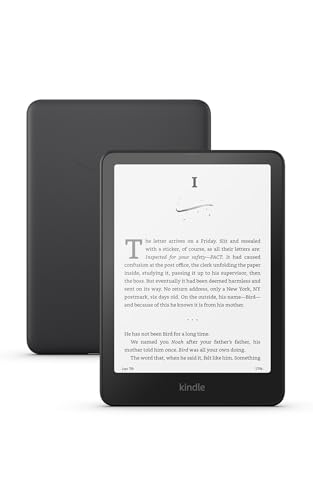
$100
upfront
8.3mo
payoff
$144
/ year
The base Kindle does everything you need for reading: front-lit display, weeks of battery life, access to all Kindle ebooks and the Libby app for free library ebooks. No waterproofing, no adjustable color temperature. If you read primarily indoors, this is the right buy.
Check current price →Price shown is approximate. Click for current price. Affiliate link.
Kindle Paperwhite (16 GB)
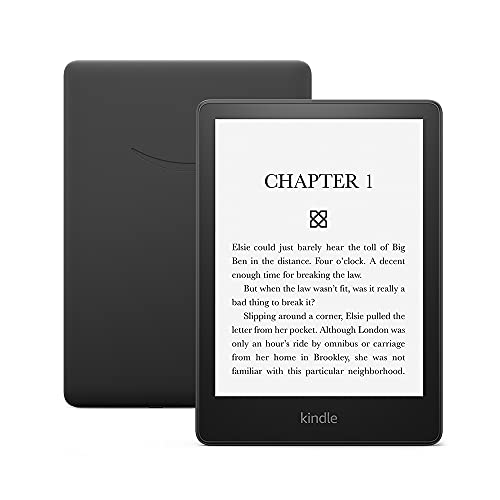
$140
upfront
11.7mo
payoff
$144
/ year
Adds IPX8 waterproofing (pool, bath, rain), adjustable warm color temperature, a higher-resolution display, and USB-C charging. Worth the $40 upgrade if you read outdoors, in the bath, or prefer the warmer reading light at night. Payoff extends to about 12 months.
Check current price →Price shown is approximate. Click for current price. Affiliate link.
Kindle Scribe (16 GB) — with Basic Pen

$340
upfront
28.3mo
payoff
$144
/ year
The Scribe is a 10.2" e-ink tablet for reading and handwriting notes. At $340, the payoff math takes 28 months vs. paperbacks — buy this because you want to annotate PDFs and take handwritten notes, not for book savings alone. Think of it as a premium notebook that also happens to pay for itself eventually.
Check current price →Price shown is approximate. Click for current price. Affiliate link.
What we didn't account for
- → Libby / library ebooks can eliminate your ebook costs entirely. If your public library has good digital inventory (most major metro libraries do), you can borrow most titles for free with a library card and the Libby app on your Kindle. This makes the payoff math dramatically better — effectively saving you the full $30/month in book costs once you've gotten through your backlog queue.
- → Hardcovers vs. ebooks is an even bigger gap. New release hardcovers run $25-35. The same book as a Kindle ebook is often $13-15 on release day. For hardcover readers, the monthly savings (and thus payoff) are even faster than our base case.
- → Amazon's ecosystem lock-in is real. Kindle ebooks are DRM-locked to Amazon's ecosystem. If you ever leave Kindle, your ebook library doesn't transfer. For DRM-free ebooks, look at Kobo or direct publisher purchases (O'Reilly, Humble Bundle). This isn't a financial issue, but it's worth knowing.
- → Used paperbacks change the math. ThriftBooks and AbeBooks sell used paperbacks for $3-6. If you buy used consistently, your alternative cost drops and the Kindle payoff extends. The Kindle math is strongest when compared to buying new books.